





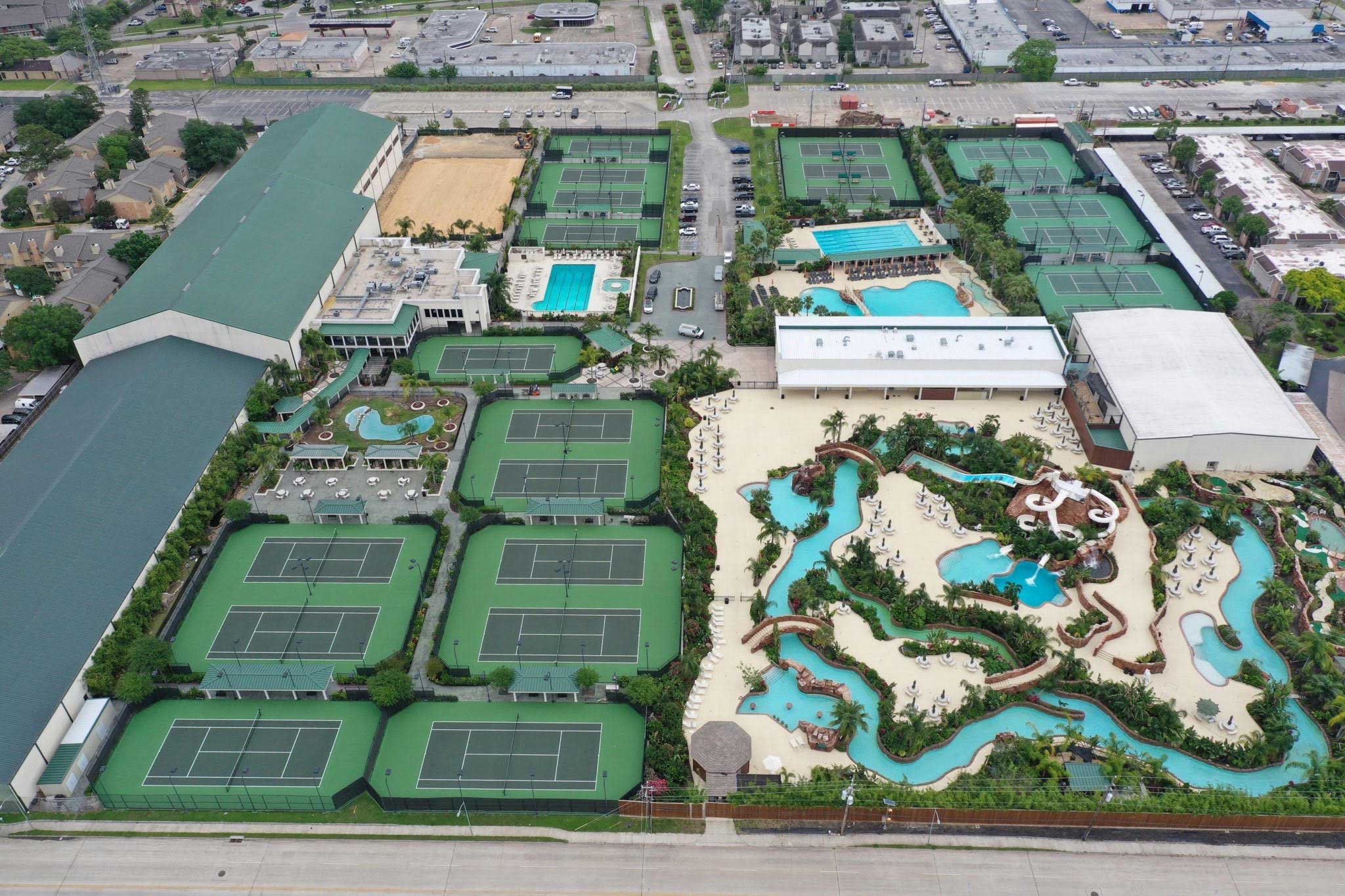
Nobody dreams about fencing — until the third ball of the morning rolls into the pond. Here's what actually gets installed around courts and why.
Fence heights that work
- 10 feet — the standard for tennis and pickleball enclosures.
- 4 feet — divider fencing between courts and along spectator sides where full height isn't needed.
- Basketball — usually 10' behind hoops, lower or none on sides.
Materials
Galvanized chain link is the workhorse; black vinyl-coated chain link is worth the modest upgrade — it disappears visually and photographs far better next to a fresh court. Gates should be 4' minimum (10' somewhere if maintenance equipment ever needs in — think resurfacing rigs).
Windscreens do more than block wind
- Play quality — pickleballs weigh 26 grams; even light wind moves them. Screens make outdoor courts playable more days a year.
- Visual backdrop — a dark screen behind the baseline makes the ball dramatically easier to track.
- Privacy and branding — logo-printed screens turn a fence into signage.
Spec open-mesh (70–80%) screens and closed attachment grommets in windy regions — a solid screen turns a fence into a sail. AT Sports supplies windscreens and court accessories alongside surfacing.
Budget ranges
- 10' chain link, single court (4 sides): $4,000–$12,000
- Black vinyl-coated upgrade: +15–25%
- Windscreens: $1,500–$4,000 per court perimeter
Sequence note
Fence posts go in before final surfacing if footers touch the pad. Building new? The cost guide has the full budget picture.