





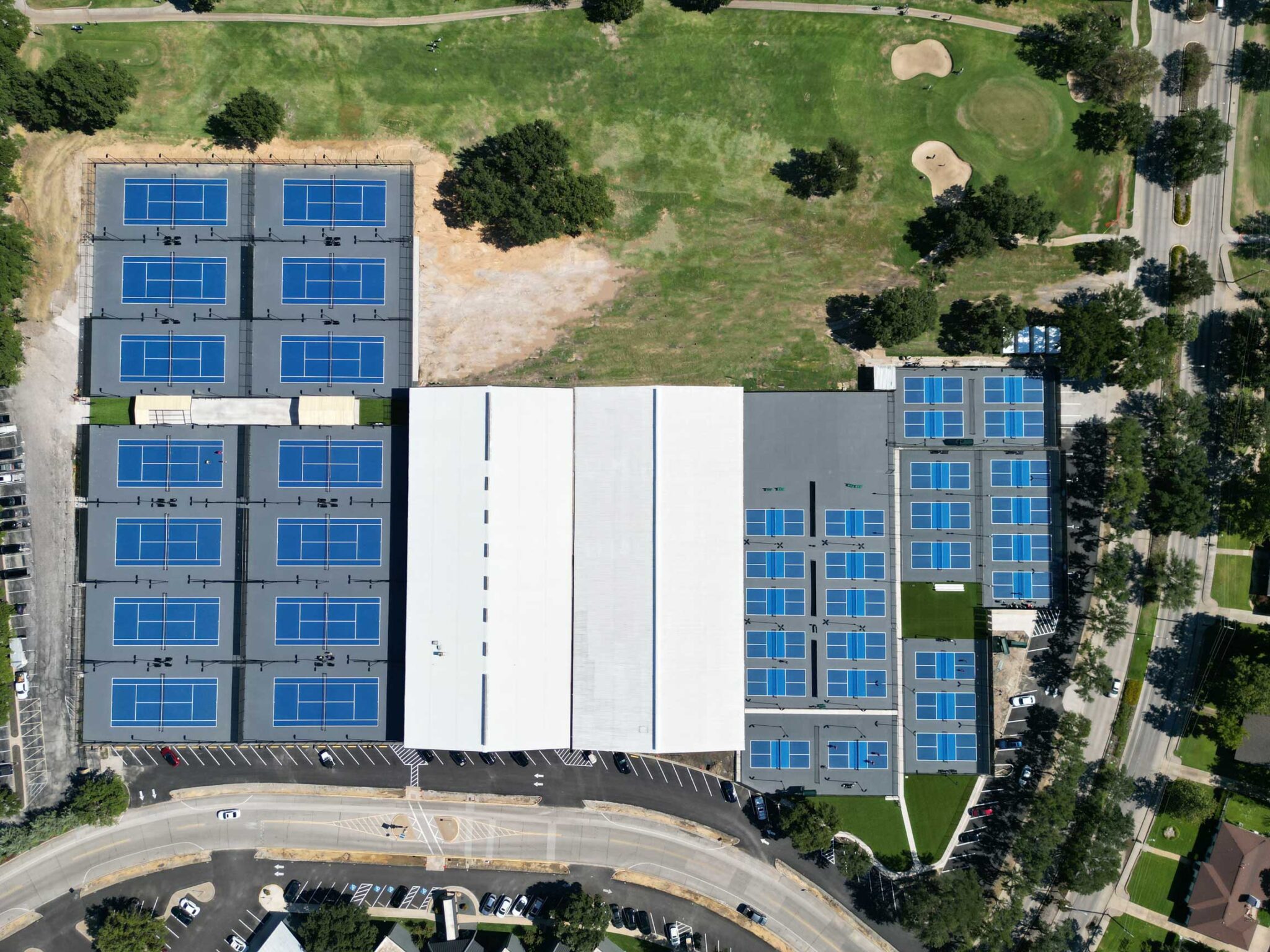
On a 95° afternoon, a dark court surface can pass 140°F — hot enough to feel through shoes, rough on balls, and hard on the coating's long-term life. The sport is booming in exactly the states where this math bites: Florida, Texas, Arizona, Georgia. Here's how hot-climate courts get designed.
Color is thermal engineering
- Dark blues, greens, and charcoals absorb the most heat — they can run 20–30°F hotter than light tones in identical sun.
- Mid-tones (lighter blues, sand, lighter greens) are the hot-climate sweet spot — court-like looks, meaningfully cooler surfaces.
- The surround doesn't have to match the court: a light surround with a mid-tone playing surface keeps the whole pad cooler than an all-dark scheme. Test schemes in the Court Designer.
Solar-reflective coatings
Modern pigment technology reflects infrared even in mid-tone colors — the same color to the eye, measurably cooler underfoot. AT Sports publishes solar reflectance testing on our coating line; if your court bakes, ask us about the reflective options when you spec colors.
Heat is a durability question too
UV and thermal cycling are what age acrylic — fade, chalking, and hairline cracking all accelerate in full sun. That's a chemistry problem: 100% acrylic systems like Acrytech are built for UV survival, and honest maintenance stretches the cycle further. Cheap blends fade in two Georgia summers; we're in Georgia, we would know.
Design-arounds worth budgeting
- Shade structures over seating (and premium courts) change facility economics in the sun belt.
- Lighting — hot-climate play moves to evenings; courts without lights lose their best hours (see the lighting guide).
- Cushion layers stay more comfortable underfoot than raw hard court as temps climb.