





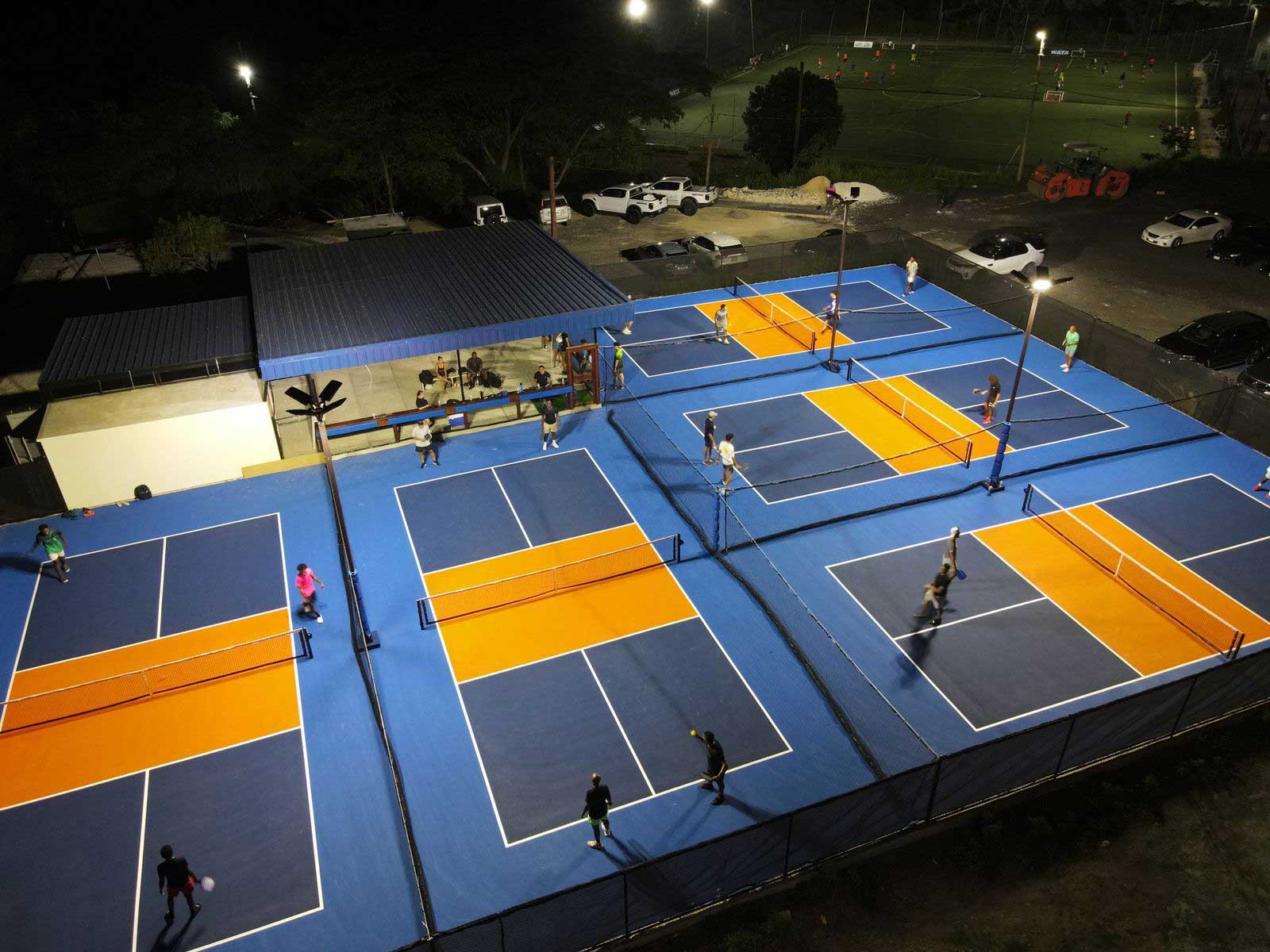
Padel is the fastest-growing racquet sport in the world, and U.S. facilities are now in the land-grab phase that pickleball went through five years ago. A padel court is a different animal from anything else in the court world — part sport surface, part structure — and budgeting one correctly means understanding both halves.
What makes a padel court
- Footprint: 10m × 20m (33' × 66') enclosed — walls are in play, like squash outdoors.
- Structure: tempered glass back walls and steel mesh sides on a fabricated frame.
- Base: a dead-flat reinforced concrete slab — flatness tolerances are tighter than tennis because the structure bolts to it.
- Playing surface: sand-dressed artificial turf in most builds; the slab and drainage under it decide how the court plays and drains.
- Lighting: integrated poles on the structure — padel is substantially an evening sport.
What it costs
Typical U.S. ranges, per court
- Court structure (glass, steel, turf, lighting): $30,000–$60,000
- Slab and sitework: $15,000–$35,000
- Installed total, outdoor: $50,000–$100,000
- Indoor builds: add the building — but padel monetizes indoor space better than nearly any sport per sq ft
Why facilities are moving now
Court economics: a padel court books four players at premium rates, runs on a 33'×66' footprint, and the U.S. has a fraction of the courts per capita of Spain or Argentina. Early facilities in each metro are setting the prices. The playbook mirrors early pickleball — and AT Sports watched that one from the inside as the official surface of the PPA Tour.
Where AT Sports fits
The slab, the surrounds, and any adjacent courts are exactly our world — and multi-sport facilities pairing padel with pickleball courts get one supply chain for the whole build. Planning a facility? Call (770) 734-3000 and we'll talk through the surfacing scope, or find an installer experienced with combined builds.