





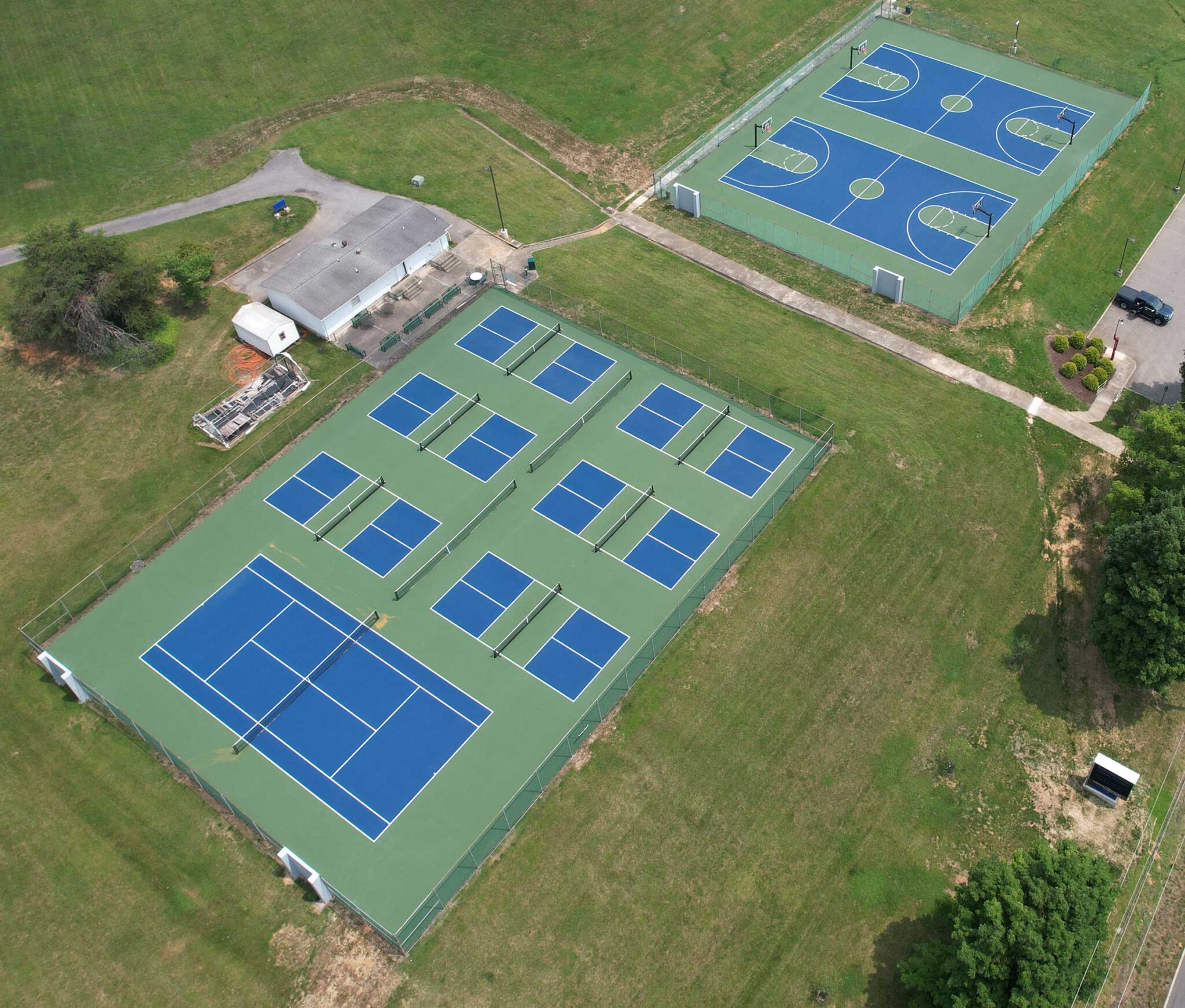
The biggest venues in pickleball routinely build championship courts in arenas that hosted a concert the night before. They do it with prefabricated roll-out surfaces — and the same technology now works for clubs, event companies, and backyards. This is the category RollX was built for.
How a roll-out court is made
RollX is a reinforced membrane with a proprietary 4mm cushion overlay and a finished acrylic playing texture — manufactured flat, shipped in rolls, and deployed over any sound, level base: concrete, asphalt, or an arena floor. Seams join on site; lines are part of the surface. Roll it out, play on it, and when the event moves, so does the court.
Where portable beats permanent
- Events & tournaments — stadium courts in days, not weeks, with pro-level consistency.
- Indoor conversions — gyms and warehouses become pickleball facilities without touching the existing floor.
- Facilities that test markets — open with roll-out courts; pour concrete when demand proves out.
- Backyards with existing slabs — a finished court over your patio or sport pad, no coating process (see the backyard guide).
- Renters and movers — the only court you can take with you.
How it plays
The question everyone asks. A quality roll-out surface plays true — consistent bounce, real texture, and the cushion layer is actually easier on joints than raw concrete-and-coatings. AT Sports builds RollX to the same performance standards as the coated courts we've supplied to the PPA Tour since 2020.
What it costs
Pricing scales with court count and site specifics, and it's quoted per project — but the comparison to own is: no sitework, no cure time, no coating labor, and the asset is reusable. For a facility, that changes the math entirely. Call (770) 734-3000 for a quote on your space.