





A running track is a rubber wear system over an asphalt base, and the choice between the two big system families — latex-bound and polyurethane-bound — sets the budget, the feel, and the resurfacing schedule for the next twenty years.
The two families
Latex systems
Black or pigmented rubber granules in a latex binder, applied in lifts over asphalt. The workhorse of high-school tracks: resilient, repairable, and the most budget-friendly full-depth system. Structural spray coats refresh the wear surface on a cycle.
Polyurethane systems
Rubber base mat with polyurethane binders and a sprayed or full-pour PU wear layer. Faster feel, longer wear, the choice for colleges and competition venues — at a meaningful price step up.
What tracks cost
Typical ranges, 400m 6–8 lane
- Latex system over existing asphalt: $120,000–$250,000
- Polyurethane systems: $250,000–$600,000+
- Resurface / re-spray cycle: every 7–10 years, at a fraction of new-system cost
- Striping and event markings: $8,000–$20,000
The maintenance truth
Tracks fail from the bottom up. The rubber protects the asphalt; when wear exposes black base mat or the surface loses granules in sheets, every season of delay adds structural cost. A track re-sprayed on schedule can protect its asphalt for decades — one left bald needs base repair before any new surface goes down.
Courts and tracks, one campus, one vendor
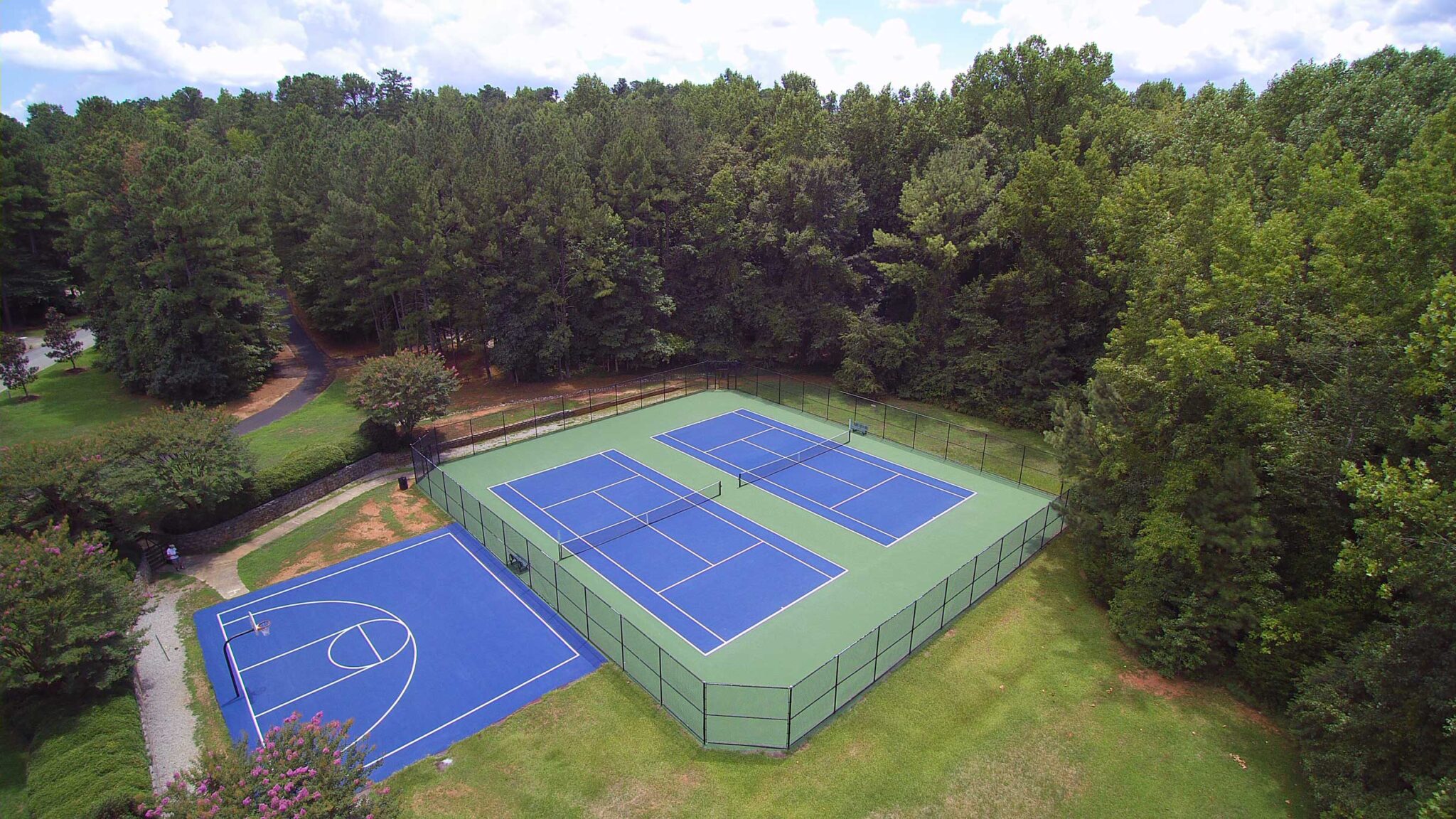
Most schools that own a track also own tennis and basketball courts — and the same seasonal weather window applies to all of them. AT Sports supplies track systems alongside court coatings, which means one manufacturer conversation for the whole campus. Call (770) 734-3000 to talk through a facility plan.