





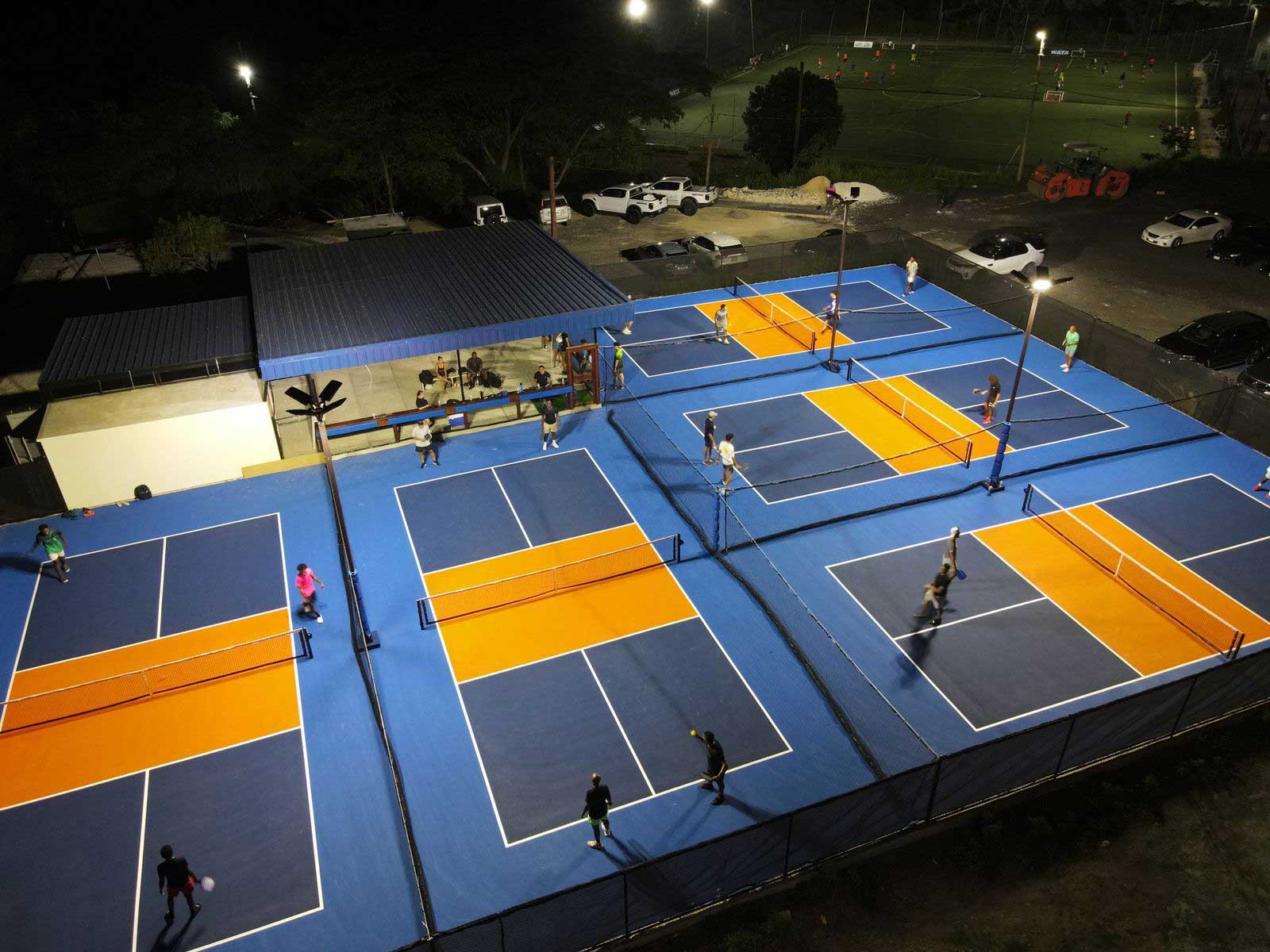
The indoor pickleball boom is a real-estate story: warehouses, big-box retail, and rec centers converting to courts. The building is the hard part; the floor is the decision that sets the product tier.
The two surface paths
Acrylic on concrete — the permanent club
If the slab is sound and the building is yours long-term, the full acrylic system (resurfacer, CushionX if you want joint-friendly courts, Acrytech color at pickleball texture) delivers true outdoor-spec play indoors. Players feel the difference from gym tile immediately.
Roll-out — speed and reversibility
RollX deploys tournament-grade courts over almost any existing floor — no coating cure, no slab chemistry, and it moves if the lease does. It's how arenas stage championship courts in days, and how a facility can open weeks sooner or test a market before committing concrete.
The building checklist
- Ceiling: 18'+ clear minimum; 20'+ preferred for serious play.
- Court footprint: 30' × 60' per court; a 10,000 sq ft floor holds ~5 courts with circulation.
- Lighting: uniform LED, no glare bombs over courts.
- Sound: pickleball is loud indoors — plan absorption panels early, not after reviews mention it.
- HVAC: players sweat; dew on a court is a liability.
The economics in one line
Indoor courts book year-round at premium rates — which is why the floor that makes players rebook (real texture, real cushion) pays back faster than the cheapest option. Planning capacity? Court sizing is in the dimensions guide; call (770) 734-3000 for a facility spec on either path.