





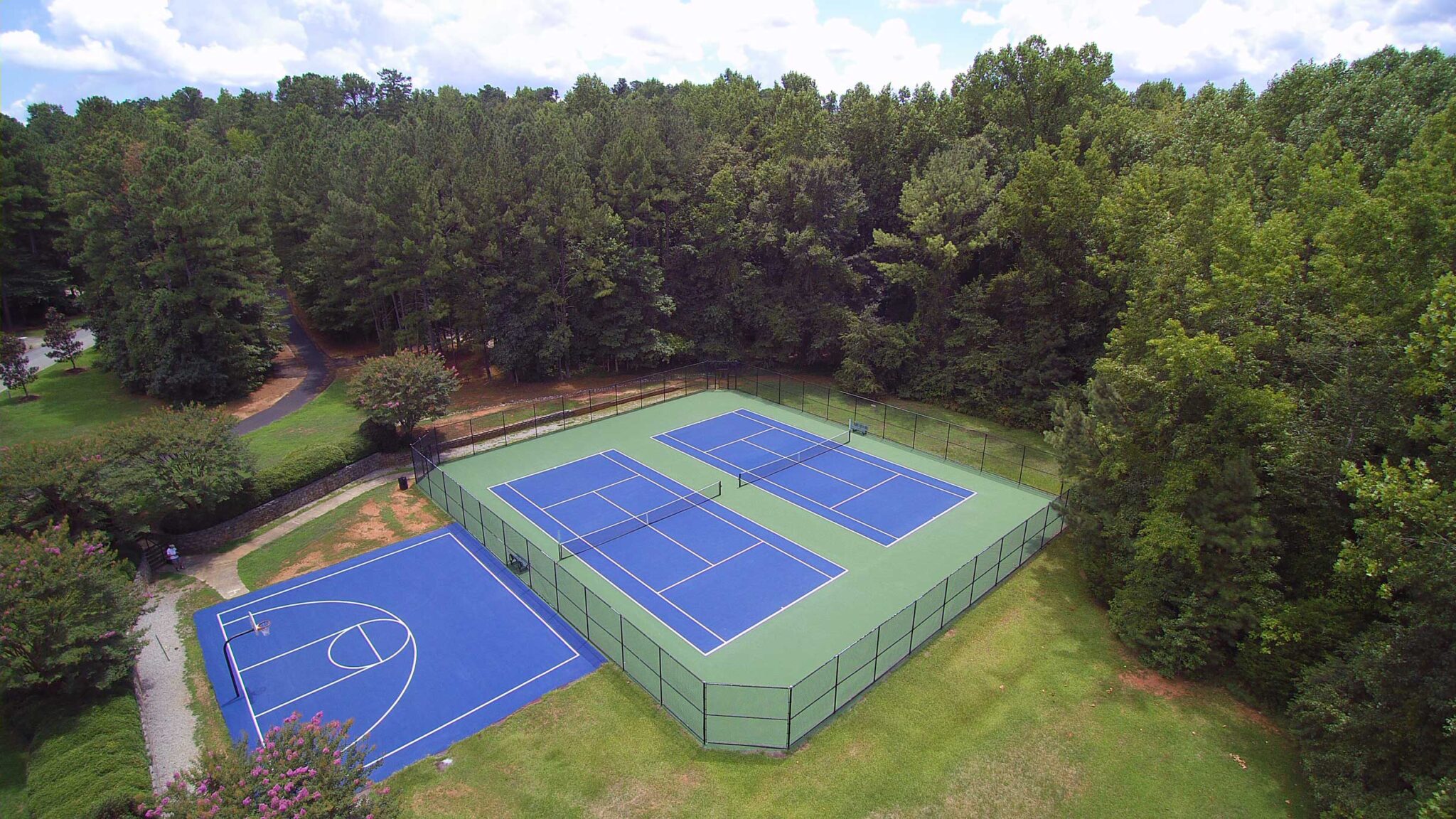
A pickleball court is a system: a stable base, correct slope, a bonded acrylic surface, and honest lines. Get one layer wrong and the court tells on you within two winters. Here's the full sequence, the way professional installers build it.
1. Site and base
Plan a 30'×60' pad (playing lines are 20'×44') with a 1% slope in one plane — enough to shed water, never enough to feel. Concrete is the premium base: 4–5" with rebar or fiber reinforcement over compacted stone. Asphalt costs less up front but moves more, and every crack in the base eventually telegraphs through the coating.
2. Curing and prep
New concrete needs 28 days of cure before coating — rushing this step is the single most common cause of coating failure. The slab then gets acid-etched or shot-blasted so the acrylic can bond, and any cracks or birdbaths are corrected with patch binder.
3. The coating stack
- Adhesion promoter / primer on fresh or slick concrete.
- Acrylic resurfacer — one to two coats to fill texture and build a uniform foundation.
- Optional cushion layers — CushionX in 4, 6, or 8mm for impact reduction.
- Color coats — two coats of 100% acrylic Acrytech with the sand load set for pickleball's texture spec.
- Line paint — masked and striped with textured line paint for a true bounce on the line.
4. Colors and layout
Two-tone courts (kitchen contrast) are now standard — try combinations in our Court Designer before you commit. Darker colors run hotter; if your court bakes in the sun, ask your installer about heat-reflective options and see our court paint guide.
5. Nets, fencing, lighting
Permanent net posts need footers placed before the pour — decide early. Fencing at 10' keeps balls in; lighting at two poles per court keeps evening leagues on. None of this touches the surface budget, but all of it belongs in the plan.
The shortcuts that cost you
- Coating green concrete — bond failure, peeling in sheets.
- Skipping crack repair — cracks return through new color in one season. Use a proper system like Faultline.
- House paint on a court — it's slick when wet and dead in a year. Court coatings are a different chemistry.
- No slope plan — standing water is the fastest killer of acrylic surfaces.
Build it once, build it right
AT Sports manufactures the full stack — coatings, cushion, crack repair, even roll-out portable courts — and supports a national network of installers who put it down correctly. Find an installer or call (770) 734-3000.